

De L'Europe Amsterdam
"Annoncer gives us exactly what every luxury kitchen needs during peak service: calmness, structure, and total operational overview. "
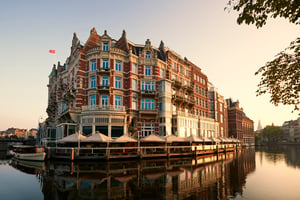
De L’Europe Amsterdam is one of the Netherlands’ most iconic luxury hospitality destinations. With multiple high-end culinary concepts operating simultaneously under one roof, including Brasserie Marie, Restaurant Flore, and Trattoria Graziella, operational precision is essential to maintaining the level of service guests expect.
For the F&B and kitchen teams led by Tim Abcouwer, the challenge was not culinary quality, but operational coordination. During peak service hours, traditional paper-based workflows increasingly created friction between teams, limiting visibility and slowing communication across the brigade.
Amsterdam, The Netherlands
From paper chaos to digital control.
Before implementing Annoncer, the kitchens relied on traditional paper tickets and verbal communication during service. While familiar, the system created unnecessary complexity during high-volume moments.
The largest frustrations came from manually organising tickets, checking order statuses, and coordinating timing between front and back of house. During busy services, this resulted in increased stress levels, reduced visibility, and a greater risk of communication errors between teams.
The need became clear: the operation required more than a kitchen tool. It needed a central operational system capable of connecting outlets, synchronising communication, and creating structure during peak hours.
A kitchen built around visibility.
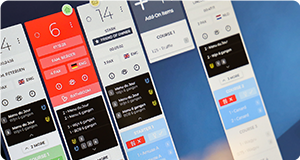
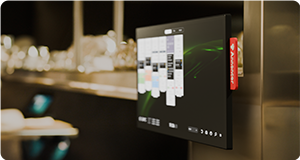
With Annoncer, De L’Europe Amsterdam transitioned from fragmented paper workflows to a fully digital kitchen operation. Orders, pacing, and table progression became visible in real time across the brigade, allowing teams to focus less on logistics and more on execution and guest experience.
Instead of chasing paper tickets or verbally checking table statuses, chefs and service staff could instantly see what was happening throughout the operation. This created a calmer working environment while significantly improving coordination between the different outlets.
According to the team, one of the most immediate operational gains came from the removal of manual ticket management. Sorting and organising paper tickets previously consumed valuable service time, particularly during peak periods.
The transition also reduced the amount of internal communication required between staff members regarding dish status and table progression, allowing teams to work with greater autonomy and focus.
“What we would miss most if Annoncer disappeared is the calmness and complete overview during peak service. The system does exactly what it’s supposed to do: it gives us the space to cook without worrying about the logistics behind the tickets.”
.jpg?width=300&name=Brasserie%20Marie%20(3).jpg)
.jpg?width=300&name=Brasserie%20Marie%20(6).jpg)
.jpg?width=300&name=Brasserie%20Marie%20(1).jpg)
.jpg?width=300&name=Brasserie%20Marie%20(2).jpg)
Operational time savings with real impact.
The implementation resulted in measurable operational improvements across the kitchen teams:
- Approximately 20 minutes saved per service through the elimination of manual ticket handling and organisation.
- Reduced internal communication regarding table and dish statuses, saving roughly 15 minutes per employee per shift.
- Fewer operational mistakes during peak service, reducing the need for guest recovery actions and improving overall productivity.
Across the operation, this translated into an estimated 5 to 7 hours of operational efficiency gained per week. On an annual basis, this represents more than 250 hours redirected away from administrative handling and back into hospitality, culinary execution, and guest experience.
More than efficiency: A structural shift in service.
Beyond the measurable efficiency gains, the team experienced a broader operational transformation.
The kitchen environment became noticeably calmer during peak moments due to the visual clarity provided by the system. Course pacing improved, coordination between outlets became smoother, and communication across the brigade became more structured and predictable.
For a luxury hospitality environment operating multiple concepts simultaneously, this level of operational consistency directly supports both guest satisfaction and staff wellbeing.
Key advantages for De L’Europe Amsterdam
- Real-time operational visibility across multiple outlets
- Reduced stress and calmer peak-hour services
- Faster and more structured communication between teams
- Improved pacing between courses
- Elimination of manual ticket management
- Reduced operational errors during high-volume services
- Measurable weekly and annual time savings
- Stronger coordination between kitchen and front of house
- More time focused on guest experience and culinary quality
For De L’Europe Amsterdam, Annoncer became more than a kitchen management system. It became part of the operational foundation that allows the team to deliver luxury hospitality with consistency, precision, and calm under pressure.
.jpg?width=300&name=Restaurant%20Flore%20(1).jpg)