

Better communication doesn't always mean more communication.
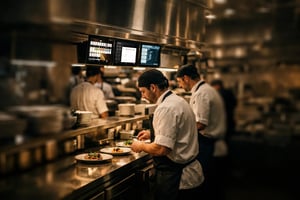
It’s 8:15 PM. The restaurant is full and service is in full swing.
A waiter steps into the kitchen: “How long for table 12?” At the pass, someone asks whether table 8 is ready for their next course. A dietary requirement is repeated, just to make sure everyone knows. Meanwhile, a last minute change needs to reach the right station.
None of these interactions seem like a problem on their own. They are part of a normal service.
But then it happens again. And again.
Front of house returns to the kitchen for another update. The kitchen asks for information that was already shared. Details are repeated across the pass because nobody wants to risk missing something.
During a busy service, these small interactions create noise. They interrupt focus, take people away from their guests and increase the chance of important information getting lost.
Better communication doesn’t mean your teams need to talk more. Quite the opposite.
The right information should already be available to the right person at the right moment.
In fine dining, where multiple courses, dietary requirements, different kitchen stations and the individual pace of every table come together, that shared overview creates more calm, more focus and more time for the guest.
Why communication breaks down during service.
Front of house and kitchen have different responsibilities, but they are managing the same service. Both teams therefore depend on accurate and up to date information.
The kitchen needs to know:
-
What has been ordered and for which table and seat
-
Which course each table is currently on
-
When preparation for the next course should begin
-
Which allergies, dietary requirements and special requests need attention
-
Whether an order or guest request has changed
-
Whether a table is ready to continue
Front of house needs to know:
-
Where each table is in their dining experience
-
Whether the kitchen is ready for the next course
-
Whether a course is in preparation
-
When dishes are ready to be served
-
Whether there are delays or changes
-
When to approach the table and prepare for the next moment in the service
The challenge begins when this information is fragmented across different systems, communicated verbally or held by individual team members.
Front of house starts walking to the pass for updates. Chefs ask whether a table is ready. Dietary requirements are repeated to make sure they have been received.
During a quiet service, this may be manageable. During a full fine dining service, with multiple courses and tables progressing at their own pace, maintaining the same level of control becomes much more difficult.
More communication isn't necessarily better communication.
When information is not readily available, teams compensate by communicating more. They ask questions, confirm details and repeat information to make sure nothing is missed.
But more communication does not necessarily mean better communication.
If front of house has to ask about the progress of a table, or a chef needs to confirm an allergy, the issue is not a lack of communication. The information simply wasn't available where it was needed.
The goal is not to remove communication between front of house and kitchen. Personal interaction and professional judgement remain essential to hospitality.
Instead, the focus should be on reducing unnecessary questions, repeated updates and constant checking.
Less unnecessary communication creates more room for the communication that matters.
Front of house needs visibility too.
Reducing unnecessary communication requires both teams to have the right level of visibility.
When a guest asks when the next course will arrive, front of house should not have to walk to the kitchen for an update. They should be able to see the progress of the table and respond with confidence.
During a busy service, fewer status requests mean fewer interruptions for the kitchen. At the same time, front of house can remain on the restaurant floor and focus on the guests.
Better visibility keeps both teams aligned without requiring constant communication.
Guest information shouldn't stop at front of house.
Visibility is not only about knowing the status of a table. It is also about knowing who is sitting at that table.
Restaurants collect valuable information through their reservation systems, including allergies, dietary requirements, preferences, special occasions and guest notes. Yet much of that information traditionally remains with front of house.
But if the kitchen is preparing the experience for that same guest, why shouldn't they have access to the information that matters to them?
By connecting the reservation system with the kitchen workflow, relevant guest information can be available before and during service. An allergy or dietary requirement no longer needs to depend on a verbal handover or a note being noticed at the right moment.
Tonny Berentsen of De Kromme Dissel describes the impact:
“Thanks to Annoncer, we have a much clearer overview of our service. Dietary requirements and allergies in particular are now immediately visible, allowing us to respond faster and significantly reduce the chance of errors.”
When relevant guest information follows the guest from reservation to kitchen, there is less to repeat, less to check and less room for information to get lost along the way.
From separate conversations to one shared service.
Bringing guest information into the kitchen is part of a bigger opportunity: connecting the information that front of house and kitchen rely on throughout the service.
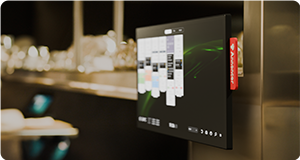
This is where a Kitchen Display System becomes more than a digital replacement for kitchen printers.
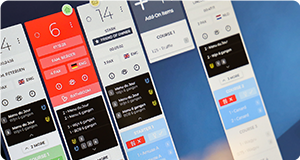
Orders and changes can flow directly from the POS into the kitchen. Reservation data provides relevant guest information before service begins. Dietary requirements remain connected to the right guest, while hold and fire instructions help coordinate each course.
At the same time, front of house gains visibility into the progress of tables and courses.
Instead of information moving through separate systems, conversations and individual team members, both teams work from the same up to date information.
For fine dining, that shared overview is particularly valuable. A single table can involve multiple courses, different menus, dietary requirements and several kitchen stations, while guests progress through their experience at their own pace.
Good communication is therefore not about moving information faster. It is about keeping everyone aligned while maintaining control over the pace and quality of the service.
Technology should create calm, not more noise.
A shared flow of information only works when everyone sees what is relevant to their role.
A chef at a specific station needs to know what to prepare and when. The expediter needs an overview of the complete table. Front of house needs visibility into the service without being overwhelmed by every detail from the kitchen.
Not everyone needs to see everything. They need to see what matters to them, at the moment it matters.
When technology supports that principle, teams spend less time searching for information, repeating updates and checking with each other.
Casimir Evens of Odille Restaurant describes exactly that:
“Annoncer allows all teams to calmly focus on what really matters: the guests. Without miscommunication or unnecessary overcommunication, we can maintain a calm service together.”
That is what technology should contribute to restaurant communication: greater clarity, fewer interruptions and more attention for the guest.
Less coordination, more hospitality.
That clarity directly affects how teams spend their time.
When front of house no longer needs to walk to the kitchen for status updates, they can stay with their guests. When chefs receive the information they need without asking for it, they can focus on preparation and timing.
Each unnecessary check may take only a moment, but across an entire service, those moments add up.
Restaurant Olijf, for example, reports saving 45 to 60 minutes per service with Annoncer, while significantly reducing miscommunication and improving coordination around each table.
“Because you spend less time on internal coordination, you can focus much more on the guest.”
That is ultimately where the value lies. Not simply in making the same service faster, but in removing unnecessary coordination and creating more time for the food, the service and the guest.
So, how do you improve communication between front of house and kitchen?
Start by looking at the moments where your teams still depend on each other to find information.
Ask yourself:
-
How often does front of house walk to the kitchen for a status update?
-
Can the kitchen see allergies, dietary requirements and guest preferences without having to ask?
-
Does the kitchen know when a table is ready for its next course?
-
Can front of house see how far the kitchen is without interrupting the pass?
-
What happens when an order or guest request changes?
-
Are updates automatically visible to the people who need them?
-
How much information still depends on verbal communication?
Every repeated question, manual update or extra check can indicate that information is not available where it is needed.
Improving communication is not about asking teams to communicate more. It is about creating a shared flow of information that keeps everyone informed throughout the service.
When that happens, the kitchen can focus on the food, front of house can focus on the guest, and both teams can manage the service with greater calm and control.
Because the best communication is often the communication your team no longer needs to have.