

Your restaurant is collecting more data than you think. Are you actually using it?
Every restaurant generates a significant amount of data during a single service. Reservations tell you who is coming, your POS records what guests order and spend, and kitchen systems capture what is being prepared and how the service progresses.
This is where restaurant data analytics comes in. By connecting and analysing information from different parts of your operation, you can better understand what happens before, during and after service.
But how much of that information are you actually using?
Before the first guest arrives, you may already know how many covers to expect, which guests have allergies or dietary requirements, where larger parties are seated and when the busiest part of the evening is likely to begin. Once service starts, another layer of information is added.
Orders arrive, courses move through the kitchen, tables progress at different speeds and preparation times change throughout the evening. By the end of the night, all of those individual moments form a detailed picture of how the service actually went.
Yet much of that information is still used only in the moment, stored across different systems or simply forgotten once the last table leaves.
The question is no longer whether restaurants have enough data. It is whether they are turning that data into something useful.
What is restaurant data analytics?
Restaurant data analytics is the process of collecting, connecting and analysing information from restaurant operations to understand performance and support better decisions.
This can include reservation data, POS transactions, kitchen preparation times, course timing and service progress.
Restaurant business analytics takes a broader view, combining operational information with business performance. It helps restaurant managers understand how different parts of the operation influence efficiency, costs and the guest experience.
For example, revenue might tell you how successful a Saturday evening was financially. Operational data can help explain whether the kitchen kept pace, where delays occurred and how smoothly the service progressed.
Before service: use what you already know.
A well prepared service starts long before the first order reaches the kitchen. Reservation data, for example, can provide both front of house and kitchen teams with useful context about the evening ahead.
Imagine an upcoming service with 85 covers, several larger parties, returning guests and six different dietary requirements. Having that information available allows the team to prepare accordingly. However, its value quickly decreases when it remains inside the reservation system.
An allergy that still needs to be copied, written down or verbally communicated to the kitchen creates another manual step. The same applies to guest preferences, special occasions and other information that could influence the service.
When systems can exchange relevant information, preparation becomes less dependent on someone remembering to check and communicate every detail.
Useful information before service could include:
- Expected covers and arrival times
- Allergies and dietary requirements
- Returning guests and relevant preferences
- Large parties or special arrangements
- Expected peak moments during the service
The objective isn't to give teams more information to process. It is to make sure the information they need is available where they need it.
During service: the plan meets reality.
Every restaurant starts the evening with a plan, but service rarely follows that plan exactly. Guests arrive early or late, one table wants to slow down while another is ready for the next course, and several large orders can reach the kitchen within minutes of each other.
At that point, real-time operational information becomes much more valuable than the original plan.
Front of house needs to understand what is happening in the kitchen, while the kitchen benefits from knowing what is happening in the restaurant. Without that visibility, teams often fall back on verbal updates.
How long for table 12?
Can we send the next course?
Is the main course ready?
One question isn't a problem. Dozens of those questions during a busy service create interruptions, additional communication and more opportunities for information to be missed.
When teams share the same operational information, they can make decisions without constantly asking each other for updates. At the same time, the restaurant starts building a much clearer record of what actually happened during service.
That includes information such as preparation times, time between courses, delays and periods where particular parts of the operation were under pressure.
Revenue tells you the result, not the whole story.
After service, revenue is understandably one of the first numbers restaurants look at. It tells you something important about the commercial result of the evening, but very little about how that result was achieved.
Consider two Saturday evenings with similar covers and exactly the same revenue. On paper, both services appear equally successful. But what happened in the kitchen tells a different story.
| Saturday A | ✅ |
Saturday B | ⚠️ |
|
|
Financially, both evenings look almost identical. Operationally, they tell two very different stories.
Preparation times, course timings and other service data provide the context behind the numbers. They help restaurants understand where service ran smoothly, where delays occurred and what could be improved.
Revenue shows what you achieved. Operational data can help explain how you achieved it.
Patterns are more valuable than individual moments.
A slow dish on one evening doesn't necessarily require action. Neither does one table waiting longer than expected. Hospitality involves people, and every service is different.
Repeated patterns tell you much more.
You might discover that a particular course consistently takes longer during peak hours. Perhaps delays start appearing once the restaurant reaches a certain number of covers, or one kitchen station becomes a bottleneck when several specific dishes are ordered at the same time.
This is also where restaurant predictive analytics becomes relevant. By analysing historical data and recurring patterns, restaurants can begin to anticipate busy periods, potential delays and changes in workload.
Predictive analytics goes beyond understanding what happened. It uses data to estimate what might happen next, helping teams make more informed decisions about preparation, staffing and service planning.
The starting point is understanding the patterns already present in your operation.
Looking at operational data over time can help answer questions such as:
- At what point during service do delays usually begin?
- Which courses or dishes regularly require more preparation time?
- Are certain stations more affected during peak periods?
- How much time typically passes between courses?
- Which information does front of house repeatedly need from the kitchen?
- Are there differences between quieter services and fully booked evenings?
Individual moments tell you what happened once. Patterns help you understand how your operation behaves.
Connect the information instead of collecting more.
Making better use of data doesn't necessarily mean collecting more of it. For many restaurants, the information already exists.
The challenge is that it lives in different places.
The reservation system knows who is coming and may already contain relevant guest information. The POS knows what has been ordered. The kitchen knows what is being prepared and how far each table has progressed. Front of house knows what is happening at the table.
When these systems operate independently, people often become the connection between them. Information is checked, repeated, entered again or communicated verbally.
Integrations can remove part of that dependency.
This doesn't mean every restaurant needs one large platform that handles every process. Specialised systems can continue doing what they do best, while exchanging the information that other parts of the operation need.
Connecting your existing systems is a practical place to start. Explore our POS and reservation integrations to see how information from different platforms can support one connected service workflow.
That is the thinking behind Connected Hospitality Operations: connecting the different parts of the restaurant without taking away the freedom to choose the technology that fits the operation.
A dashboard doesn't improve your restaurant. Using the insights does.
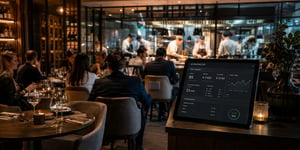
More reports don't automatically lead to better decisions. A dashboard filled with numbers is only useful when those numbers help you understand what's happening in your restaurant and where improvements can be made.
This is where restaurant business analytics comes in. By analysing operational data from previous services, you can identify patterns, compare performance and make more informed decisions.
For example, reporting can help you understand:
- Preparation times: Which dishes, courses or kitchen stations consistently take longer?
- Busy versus quieter services: How does the kitchen perform when the number of covers changes?
- Recurring bottlenecks: Where do delays repeatedly occur?
- Course timing: How consistently are courses prepared and served throughout the evening?
- Performance over time: Are changes to your workflow actually improving service?
The real value comes from acting on these insights.
If preparation times increase at the same point every evening, you can investigate why. If one course regularly delays the rest of the menu, you can review how preparation is organised. And if the same bottleneck appears across several services, you have a clearer starting point for improvement.
A useful dashboard helps you recognise patterns, ask better questions and make informed decisions.
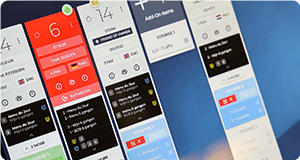
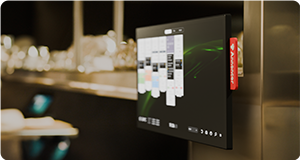
That's the idea behind Annoncer Reporting & Analysis. It helps you turn operational data collected during service into insights you can use to evaluate performance and identify opportunities for improvement.
Discover how Annoncer software supports your kitchen workflow, from managing orders during service to reviewing performance afterwards.
Turn service data into operational insight.
Your restaurant already generates valuable information every day. The opportunity is to connect it, understand it and use what you learn to improve future services.
Discover how Annoncer Reporting & Analysis helps you turn kitchen data into practical insights and make more informed decisions.
Frequently asked questions.
Restaurant data analytics is the process of analysing information from reservations, POS systems, kitchen operations and service activities. It helps restaurants understand performance, identify recurring patterns and make informed operational decisions. For example, analysing preparation times and course timing can reveal where delays regularly occur during service.
Restaurant predictive analytics uses historical data and analytical models to estimate future outcomes, such as expected demand, busy periods or potential operational bottlenecks. It can help restaurants plan staffing, preparation and resources. The reliability of predictions depends on the quality of the available data and the methods used.
Useful restaurant data includes reservations, guest numbers, preparation times, course timing and service delays. The most relevant information depends on what you want to understand. For example, a restaurant looking to improve kitchen coordination may benefit more from analysing course timing than from reviewing revenue alone.
Start with a specific operational question. Perhaps you want to understand why certain courses take longer during busy services or where delays regularly occur.
Review the available data and look for recurring patterns. Use those findings to make small, measurable improvements.
If you're considering a kitchen management system to support your restaurant, you can also explore Annoncer's pricing to understand the available options.