.jpg?width=300&name=Exterior_Alex_Teuscher_5_under_1MB%20(1).jpg)
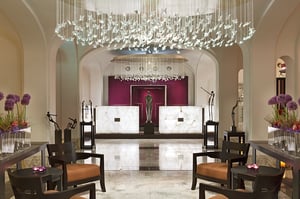
Sofitel Legend The Grand Amsterdam.
Shared information and smoother operations.
Key operational outcomes.
Guest information and operational details are less dependent on verbal handovers between departments.
.jpg?width=1500&height=2000&name=HR%20-%20Sofitel%20Legend%20The%20Grand%20Amsterdam%20-%20Raoul%20Meuwese%20(Michael%20Graste).jpg "HR - Sofitel Legend The Grand Amsterdam - Raoul Meuwese (Michael Graste)")
Inside Sofitel Legend The Grand Amsterdam.
Delivering a seamless guest experience across multiple restaurants, room service, breakfast and banqueting requires every department to work from exactly the same operational information.
Behind every smooth service is a coordinated operation, with kitchen, front of house and management working from shared information. After more than five years of working with Annoncer, we spoke with the team at Sofitel Legend The Grand Amsterdam about what operational excellence looks like in practice.
About Sofitel Legend The Grand Amsterdam.
Sofitel Legend The Grand Amsterdam is one of the Netherlands' leading luxury hotels, featuring 178 rooms, multiple restaurants, room service, breakfast operations and 19 meeting and event spaces.
Every day, multiple departments operate simultaneously, including fine dining Restaurant Bridges, Oriole Garden Bistro, Breakfast, Room Service, Banqueting and Management. Keeping every team aligned requires complete visibility across the entire operation.
After more than five years of working with Annoncer, this was the first opportunity to sit down with Executive Chef Raoul Meuwese to reflect on how the system has influenced their daily operation. Rather than discussing features, the interview focused on the practical impact on communication, teamwork, guest experience and business performance after years of real world use.
Hospitality has changed.
Luxury hospitality has evolved in recent years, with personalised experiences, including dietary requirements and allergies, becoming increasingly important. As a result, teams need to manage more information across the operation while ensuring the guest experience remains seamless.
For Sofitel Legend The Grand Amsterdam, the challenge isn’t about serving more guests than before. It’s about coordinating more information across more departments, while keeping the guest experience seamless and effortless.
As Executive Chef Raoul Meuwese explains:
" Nowadays, with so many different diets and allergies to consider, there’s a lot of information to keep track of. Having a clear overview really helps us stay on top of it all and ensure we can give every guest the experience they deserve.”
As guest expectations and operational complexity continue to evolve, having the right information available across departments has become increasingly important. Operational excellence is about giving teams the visibility and clarity they need to work together seamlessly, maintain high standards, and deliver a consistently exceptional level of service.
Keeping information connected.
Before implementing Annoncer, communication between the kitchen and front of house relied on a combination of verbal updates, paper tickets and separate systems. As the operation evolved, there was an opportunity to create a more connected way of sharing information, from expected reservations and dietary requirements to day-to-day operational details.
With the hotel operating across multiple restaurants, room service, breakfast and banqueting, having a clear overview across departments became increasingly valuable. Bringing this information together gives teams greater visibility, supports closer collaboration and helps everyone stay aligned throughout the operation.
As Raoul Meuwese explains:
“Sometimes information would stay with one person or in one place. Having a shared overview means everyone can work from the same information and ensure the guest experience remains consistent.”
The focus wasn’t on changing how the team worked, but on making it easier for every department to access the right information at the right moment. With everyone working from the same overview, teams can stay connected, collaborate more effectively and keep the focus on delivering an exceptional guest experience.
One shared source of information.
With multiple restaurants, room service, breakfast, banqueting and hotel operations running simultaneously, having access to the same real-time information across every department is essential.
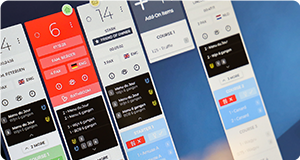
Reservations, expected covers, table status, allergies, dietary requirements, special requests and course timing are all visible across the operation, giving teams a clear and shared overview of what is happening at any given moment.
As Raoul Meuwese puts it:
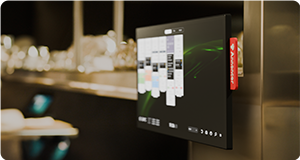
"Everybody knows because everything is on the screens available."
Rather than relying on individual updates, teams can see the information they need at a glance, helping everyone stay aligned and focus on delivering a seamless, personalised guest experience.
Connected teams.
With everyone working from the same real-time information, teams have a shared understanding of what is happening across the operation.
Instead of relying on colleagues for reservation details, allergies or table status, every department can access the information they need directly, supporting a smooth and connected service.
As Raoul Meuwese explains:
"People had to ask all the time how many bookings we had. Now everyone has the information they need at a glance. Everything is available, so everybody knows what is happening."
With a shared overview across departments, teams stay aligned throughout service, information is readily available when it is needed, and everyone can focus on delivering an exceptional guest experience.
Coordinating the guest experience.
Exceptional hospitality is about creating the right rhythm of service and delivering each course at the right moment.
Shared operational visibility helps the kitchen and front of house coordinate the pace of service with greater precision. When both teams have insight into table progress and kitchen status, they can make informed decisions about when the next course should move forward, creating a smooth and well-paced experience for the guest.
Especially in a complex operation, great timing is about more than efficiency. It’s about keeping the kitchen, front of house and guest experience aligned, so every part of the service feels considered and seamless.
Clarity and confidence in service.
Clear, accessible information gives teams greater confidence when making decisions throughout service. When allergies, dietary requirements, changes and other relevant details are visible within the operational workflow, everyone can work from the same up-to-date information.
This creates greater clarity and control in the kitchen, helping teams deliver each dish with confidence and ensuring individual guest requirements are consistently reflected throughout the service.
A more personal guest experience.
When teams have the right information at their fingertips, they can give greater attention to the details that make a guest experience feel personal and considered.
Shared operational visibility gives every department a clear view of the information that matters, helping teams anticipate needs, coordinate seamlessly and deliver service with confidence.
Ultimately, operational excellence isn’t about technology itself. It’s about giving teams the information and clarity they need to create meaningful guest experiences and deliver truly personal hospitality.
Planning & preparations.
With real-time visibility into upcoming reservations and expected covers, the kitchen can prepare purchasing, production and staffing with greater confidence, days in advance.
As Raoul explains:
"We know we need to order more or less this amount of carrots, turbot, caviar... so we can plan everything much better."
Using reservation data as part of purchasing and production planning helps the team make informed decisions about quantities, prepare accurately for demand and maintain greater visibility over food costs. This supports a considered approach to planning, while helping the team maintain the high standards expected of the operation.
Confidence throughout service.
Shared operational information gives teams a clear view of the service as it unfolds. Reservations, guest requirements and service information are readily available across the operation, helping departments stay connected and work from the same up-to-date information.
Because of this teams can anticipate needs, make informed decisions and coordinate across departments.
Ultimately, this shared overview supports a confident and consistent approach to service, giving the team the clarity they need to focus on creating an exceptional guest experience.
Technology that supports Hospitality.
The best hospitality technology feels natural to the teams using it and remains largely invisible to the guest. It supports the operation in the background, making relevant information available where and when it is needed.
For an operation such as Sofitel Legend The Grand Amsterdam, technology needs to be intuitive, reliable and connected with the wider hotel operation.
In a hotel that runs around the clock, it also needs to be easy for teams to work with and supported whenever needed. When technology fits naturally into the way teams work, it becomes a valuable part of the operation, supporting the processes behind the scenes while allowing teams to remain focused on what matters most: hospitality.
Technology supports people.
Technology alone does not create a great guest experience. People do.
In a complex hotel operation, the role of technology is to make relevant information accessible and support teams with greater clarity throughout service. This allows employees to draw on their experience, judgement and attention where they matter most, in creating thoughtful, personal experiences for guests.
Annoncer supports this in the background, giving teams the information they need while leaving the most important part of hospitality firmly in their hands: the human connection.


Beyond The Grand: what we see across Annoncer operations.
The experience at Sofitel Legend The Grand Amsterdam reflects a broader principle we see across Annoncer operations: when teams have clear, accessible information at their fingertips, they can give greater attention to the service itself.
By supporting teams with the information they need, technology creates the space for employees to focus on what they do best, delivering thoughtful, personal hospitality.
The exact impact differs by operation. At fellow Amsterdam luxury hotel De L’Europe Amsterdam, for example, the team reports saving approximately 20 minutes per service by eliminating manual ticket handling and organisation. Reduced internal communication around table and dish status accounts for an additional estimated 15 minutes per employee per shift.
Across their operation, this translates into an estimated 5 to 7 hours of operational efficiency per week.
These figures are specific to De L’Europe Amsterdam and are included to illustrate the broader operational impact Annoncer can have. They are not measured results from Sofitel Legend The Grand Amsterdam.
What Hospitality leaders can learn.
Every hospitality operation is different. Yet the principles behind operational excellence are remarkably consistent. The experience of Sofitel Legend The Grand Amsterdam highlights five lessons that can apply to restaurants and hotels of different sizes.
.svg)
.svg)
Shared visibility helps kitchen and front of house coordinate the pace of service and create a smooth, seamless experience for guests.
.svg)
Relevant operational information gives teams the clarity and confidence to make informed decisions throughout the operation.

With information readily available, teams can give greater attention to the guest and focus on delivering thoughtful, personalised service.